
Rajasthan Governor Haribhau Bagde highlighted ethanol's potential to protect India from volatile petroleum markets and geopolitical risks, advocating for its widespread production and use. He, along with other officials, emphasised ethanol's role in strengthening the rural economy, ensuring timely cane payments, and combating carbon emissions, while also discussing its historical context and current government support.

A recent building collapse in Satya Niketan, Delhi, which killed seven people, has brought to light the dire living conditions faced by students in paying guest (PG) accommodations near Delhi University's South Campus. Due to a severe shortage of on-campus hostels, students are forced to pay high rents for cramped rooms with poor ventilation, inadequate facilities, and sub-standard food. The article details student experiences with non-functional amenities, mandatory food charges for poor quality meals, and the lack of support from student bodies, highlighting a systemic issue in student housing.

Indian refiners are diverting 350,000 tonnes of sugar, originally slated for export, to the domestic market to ease a supply crunch and stabilise prices ahead of the festive season.

Even as the prices of food items in the international market dropped sharply from their peak in 2008 in response to higher global stocks and improved export supplies, food prices in most of the developing countries have defied this trend and remain high.

Iranian President Masoud Pezeshkian urged BRICS nations to expand trade in national currencies and build an inclusive global economic framework. He criticised "unilateral sanctions" by Western powers, stating they make emerging economies vulnerable and impact global food security. Pezeshkian emphasised BRICS' role in creating a balanced world order and highlighted Iran's geopolitical and energy capacities for cooperation.
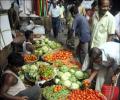
Trend could continue on downward revision in winter harvests.
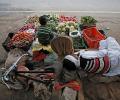
The spike in food prices at the onset of the monsoon season has corroborated the Reserve Bank of India's (RBI's) view that the fight against inflation is far from over, the State of the Economy report of the central bank said. At the same time, the report said that the country is poised to become the fastest-growing major economy in the world, notwithstanding some sequential moderation in economic activity in June. Consumer Price Index (CPI)-based inflation rate increased to 4.8 per cent in June 2023, from 4.3 per cent in May, primarily on account of an increase in food inflation.

A group of experts has voiced significant concerns regarding India's ethanol-blended fuel policy, citing potential negative impacts on land-use, agriculture patterns, food security, groundwater levels, and household incomes. They recommend a return to E10 fuel and a review of the policy's overall benefits versus costs to consumers and the environment.

The Centre has spent 28 per cent of its FY27 capital expenditure budget of Rs 12.21 trillion in the first three months against around 24.5 per cent during the corresponding period a year ago.

FAO's Food Price Index is a monthly measure of change in international prices of 55 commodities.

"That 0.2 per cent rise in food inflation is temporary... This (rise in food prices) is not the trend," Pawar said on the sidelines of an Indian Council of Agricultural Research Award ceremony in New Delhi.

'These limits will change. Very soon restrictions, restrictions will come.'

India's consumption stocks, which have outperformed the broader market, are now facing significant pressure due to a gradual rise in fuel prices and the potential for higher inflation. Analysts warn that companies may be forced to pass on increased input costs to consumers, potentially hurting demand across both staples and discretionary categories, with a looming threat of deficient monsoon rainfall further exacerbating inflationary concerns.

Many countries, including Japan, are having deflation and they are trying to go back to an era of inflation.

Members of the Reserve Bank of India's (RBI) Monetary Policy Committee (MPC) have indicated that interest rate hikes may be necessary sooner rather than later, as headline inflation is projected to rise from its current benign levels in the coming months, according to the minutes of the August review.

The Asian Development Bank (ADB) has revised down India's GDP growth forecast for fiscal year 2026-27 (FY27) to 6.6 per cent from an earlier 6.9 per cent, primarily attributing the change to elevated energy prices stemming from the Middle East conflict. Despite this moderation, India is still expected to remain the world's fastest-growing major economy.
A global food policy think tank has mooted a two-pronged strategy to avert recurrence of such situations. The proposed strategy involves the creation of a small physical stock of food and putting in place a mechanism for market intelligence-based intervention in food markets to discourage speculation. It rules out building a significant physical publicly held and managed world grain reserve.

The Reserve Bank of India has marginally increased its GDP forecast for the current fiscal to 6.7 per cent while slightly lowering the inflation projection to 5 per cent. The central bank noted that while domestic economic activity shows resilience, global turbulence, particularly re-escalating conflicts and volatile oil prices, continues to pose risks to the inflation outlook.

The reopening of the Strait of Hormuz, following a ceasefire agreement between the US and Iran, is expected to significantly ease India's crude oil supply risks, lower freight costs, and reduce inflationary pressures, as global oil prices have already dropped.
It is not just India that is witnessing a continuous increase in food prices.
Spiralling prices of wheat, maize, sugar and oils apart from food items such as vegetables turning costlier, are pushing food inflation higher, according to World Bank.

India's wholesale price inflation surged to 8.30 per cent in April, up from 3.88 per cent in March, primarily driven by a significant increase in the prices of fuel, power, and crude petroleum, according to data from the commerce and industry ministry.

Tata Consumer Products reported healthy revenue growth in Q1 FY27, driven by its India branded business and accelerating momentum in newer segments, which are now expected to sustain double-digit sales growth and improve profitability.

It would also be the fifth month of consecutive drops in the index.

For Chellam, an elderly resident of Tamil Nadu's Salem district, Tuesday began like any other hard day on the field. But by afternoon, a fleeting encounter with Tamil Nadu Chief Minister C Joseph Vijay transformed an ordinary workday into a memory she says she will cherish for the rest of her life - one she compares to winning a "crore of rupees."

Amul and Mother Dairy, India's largest dairy product retailers, have increased milk prices by Rs 2 per litre, marking the second such hike in 13 months. This move is expected to intensify inflationary pressures, already fuelled by global conflicts, and will impact household budgets across the country.

Rs 299,900 can buy you Apple's first foldable iPhone. Or it can buy you a passport full of memories, a suspiciously large holiday wardrobe and enough airport coffee to develop a personality.
According to the Food and Agriculture Organisation, global food prices fell for the first time after eighth consecutive months of price spikes in March this year in the wake of a decline in international prices of oil, sugar and cereals.

A government adviser has called for India to reintroduce a petrol variant with a lower ethanol blend, such as E10, alongside the current E20 fuel. This move aims to protect millions of older vehicles, particularly two-wheelers, which may experience performance issues and damage from the higher 20 per cent ethanol blend.
Global food prices are rising and are likely to touch an all-time high in 2013 due to drought in some parts of the world, according to a report.

The maximum fall was witnessed in dairy prices.

Despite admitting to price pressures both from food items and input prices, RBI Governor Shaktikanta Das on Wednesday hoped that a normal Southwest monsoon will have a "soothing impact" on inflation pressures and ruled out any wide variations in medium-term inflation forecast from what was given in April. In an unscheduled address earlier in the day amidst the raging pandemic, Das said the overall outlook for the economy is highly uncertain and is clouded with downside risks. He offered a slew of relief and liquidity measures to individuals and small businesses apart from a Rs 50,000 crore special liquidity window to the healthcare sector.
The United Nations on Friday expressed concern that food prices continue to remain high in developing countries, hurting millions of poor in both rural and urban areas.
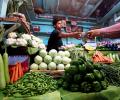
The wholesale price-based inflation eased to 10.66 per cent in September, helped by moderating food prices even as crude petroleum witnessed a spike. WPI inflation remained in double-digit for the sixth consecutive month. In August, it was 11.39 per cent. In September 2020, inflation was 1.32 per cent. "The high rate of inflation in September 2021 is primarily due to rise in prices of mineral oils, basic metals, non-food articles, food products, crude petroleum & natural gas, chemicals and chemical products etc. as compared the corresponding month of the previous year," the commerce and industry ministry said in a statement.

The RBI said recently that the upsurge in inflation in April was led by food and commodity prices.
Food prices around the world are rising to historic highs following extreme weather conditions.Food prices around the world are rising to historic highs following extreme weather conditions.

The Reserve Bank of India (RBI) has maintained its benchmark policy rate at 5.25 per cent for the fourth consecutive meeting, prioritising clarity on inflation trends, particularly concerning energy costs and geopolitical developments.
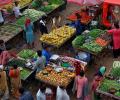
Wholesale price inflation extended upward momentum for the second straight month, recording at 0.83 per cent in December 2025, driven by an uptick in prices of food, non-food articles, and manufactured items on a month-on-month basis, government data showed on Wednesday. Wholesale Price Index (WPI)-based inflation returned to positive in December, after witnessing a deflationary trend in the previous two months.

India's retail inflation marginally increased to 3.4 per cent in March, up from 3.21 per cent in February, primarily due to an uptick in certain food items and the initial impact of the West Asia crisis on fuel prices, according to government data.

Delhi Police have arrested a shop owner near the Kapashera border for selling expired food and cosmetic products. A large quantity of expired goods, including groceries and dairy products, were seized.
